القائمة الرئيسية
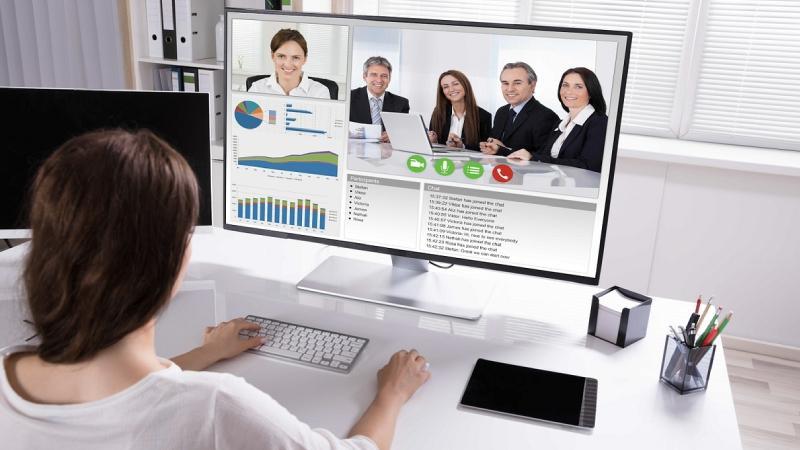
There is a silent distortion happening inside many organizations today. The people leaders see most often are still the people they instinctively trust most. Meanwhile, some of the strongest contributors are producing remarkable work from kitchen tables, coworking spaces, and home offices without ever stepping into the spotlight.
This phenomenon, often called “Proximity Bias,” serves as a backstage pass to office visibility. Employees physically present in the workplace naturally receive more recognition and attention, and sometimes even better evaluations, than equally capable colleagues working remotely.
The old management playbook was built for a world where visibility meant value. But in today’s hybrid economy, counting desk hours is about as useful as judging a movie by how long someone sat in the theater.
Modern leadership demands a different lens. Results matter more than presence. Impact matters more than appearances. And leaders who fail to adapt risk watching their best talent quietly walk out the door.
Understanding the challenges behind remote performance evaluations is no longer an operational issue tucked away inside HR departments. It has become a defining leadership skill.
The First Three Challenges: The Visibility Crisis
The first wave of problems begins the moment leaders lose day-to-day physical visibility into how work actually happens.
1. The Absence of “Work Context” and Invisible Effort
Remote employees often navigate technical failures, communication delays, timezone friction, and operational chaos that managers never see. Leaders usually encounter only the polished final result, not the uphill climb required to produce it.
That disconnect can unfairly punish dedicated employees who spend enormous effort solving problems behind the curtain.
A 2021 study from Gartner found that leaders frequently rated in-office employees more favorably than remote workers, even when productivity and output quality were essentially identical.
That is the danger of managing through a keyhole instead of a full window.
2. Digital Communication Flattens Human Emotion
A video call captures words. It rarely captures emotional nuance.
Tone becomes harder to interpret. Empathy feels diluted. Constructive feedback can suddenly sound cold or confrontational, even when the leader’s intention is supportive.
Without facial subtleties, body language, and natural human energy, performance conversations can feel emotionally sterile. Employees may leave meetings replaying sentences in their heads like a bad voicemail they cannot stop analyzing.
In remote environments, clarity is no longer enough. Leaders must also communicate emotional safety.
3. The Loudest Person in the Chat Is Not Always the Most Valuable
Digital workplaces tend to reward visibility theater.
Employees who constantly reply to emails, dominate virtual meetings, and maintain nonstop online activity often appear more engaged than they actually are. Meanwhile, highly capable professionals quietly producing exceptional work can fade into the background like underrated actors in an overcrowded streaming catalog.
One of the biggest leadership mistakes in hybrid environments is confusing responsiveness with contribution.
Fast replies are not the same thing as meaningful results.

The Next Four Challenges: The Standards Crisis
Once visibility becomes unreliable, organizations run into an even bigger problem: how to measure performance fairly.
4. Vague Goals and the Need for SMARTER Standards
Unclear expectations are dangerous in any workplace. In virtual environments, they become catastrophic.
Remote employees need precision. Goals must evolve beyond traditional frameworks to standards that are specific, measurable, motivating, adaptable, consistently reviewed, and directly tied to strategic priorities.
Without that structure, performance reviews become little more than educated guesswork dressed up in corporate language.
And employees can feel the difference immediately.
5. Remote Reviews Can Feel Emotionally Empty
A performance evaluation should feel like a coaching conversation, not a software update notification.
Yet many virtual reviews feel painfully transactional. Employees become numbers on dashboards instead of people with ambition, stress, creativity, and emotional complexity.
Over time, that emotional disconnect chips away at loyalty. Work begins to feel mechanical. Motivation fades quietly rather than dramatically, which makes it even harder for leaders to detect.
Culture does not disappear overnight. It erodes one emotionally detached interaction at a time.
6. Metrics Tell the Story, But Never the Whole Story
Modern workplaces are drowning in dashboards, KPIs, analytics, and productivity data. But numbers without context can become dangerously misleading.
A sudden drop in performance might reflect burnout, caregiving responsibilities, mental exhaustion, or temporary life disruption rather than disengagement or incompetence.
Strong leaders understand that data provides clues, not conclusions. Algorithms can measure activity. They cannot measure humanity.
7. Delayed Feedback Turns Small Problems Into Expensive Ones
Waiting until the end of the year to discuss performance issues in a remote environment is like ignoring a blinking warning light in your car for twelve straight months.
By the time the conversation finally happens, frustration has already hardened on both sides.
Research from Gallup shows that employees who receive regular and meaningful feedback are significantly more engaged at work, especially when the guidance is timely and directly connected to real situations.
Remote teams need continuous course correction, not annual surprise packages.
The Leadership Upgrade Modern Teams Actually Need
Fixing remote evaluation challenges requires more than new software or updated HR forms.
It requires a complete mindset shift.
The best hybrid leaders no longer act like workplace surveillance officers. They operate more like performance architects, creating environments where people can succeed consistently regardless of location.
1. Adopting a “Continuous Feedback Loop”
The strongest leaders have stopped treating performance reviews like a yearly dentist appointment everyone dreads.
Instead, they create short, recurring conversations throughout the year. These regular check-ins reduce anxiety, strengthen trust, and make feedback feel normal instead of threatening.
When communication becomes continuous, improvement becomes natural.
2. Use Documentation to Reduce Bias, Not Build Surveillance
Smart documentation creates fairness.
Tracking achievements, milestones, contributions, and measurable impact helps organizations evaluate employees based on evidence rather than memory or office visibility.
Done correctly, technology becomes a flashlight that reveals contributions clearly rather than a microscope that makes employees feel watched.
3. Develop the Skill That Defines Modern Leadership: Digital Empathy
Hybrid leadership is not just operational. It is deeply emotional.
Digital empathy means recognizing burnout signals hidden behind polite messages. It means listening carefully during video calls. It means noticing silence, disengagement, or subtle shifts in energy before they evolve into resignation letters.
Employees do not expect perfection from leaders. They expect humanity.
And in remote environments, emotional intelligence travels farther than authority ever will.

How Wolfa Academy Helps Leaders Build Trust in Hybrid Workplaces
At Wolfa Academy, we believe the real challenge is not remote work itself. The real challenge is the outdated leadership mindset many organizations still carry into digital environments.
Our leadership programs help managers replace visibility-based judgment with impact-driven evaluation systems rooted in trust, fairness, and accountability.
We equip leaders with advanced “Performance Coaching” techniques designed specifically for hybrid teams, helping them lead meaningful evaluation conversations through virtual communication without losing empathy or clarity.
Our methodology helps organizations shift away from monitoring attendance and toward measuring genuine value creation, because employees should never feel invisible simply for working behind a screen.
The Future Belongs to Leaders Who See Beyond the Screen
In the hybrid era, fairness has become a retention strategy.
The organizations that thrive tomorrow will be the ones that learn how to recognize contribution without relying on physical proximity. Leaders must move beyond outdated assumptions and build cultures where trust, transparency, and measurable impact define success.
Remote evaluation challenges are not simply HR complications. They are leadership stress tests.
The leaders who pass them are the ones who learn to recognize excellence, no matter where it shows up.
Be the kind of leader who notices the quiet achiever, values outcomes over optics, and turns fairness into your team’s shared language.
Is your organization struggling to maintain motivation because employees no longer trust the evaluation process?
Hybrid leadership requires a renewed mindset and precise measurement tools. Contact “Wolfa” Academy today and join our innovative leadership programs to help you design a fair evaluation system that boosts productivity and strengthens employee loyalty—regardless of where your team members work. The future of your organization begins with intelligently recognizing employee impact.
FAQs
1. How can I overcome Proximity Bias when evaluating a hybrid team?
The most effective approach is to create unified evaluation standards built entirely around measurable outcomes, contribution quality, and strategic impact instead of physical office presence.
2. What is the ideal frequency for remote performance evaluations?
Short weekly or biweekly conversations are far more effective than relying exclusively on annual performance reviews.
3. How can I deliver negative feedback to a remote employee without harming morale?
Keep cameras on whenever possible, begin with genuine appreciation, use clear and specific examples, and focus the conversation on future improvement rather than personal criticism.
4. Should time-tracking tools be used for employee evaluations?
At Wolfa Academy, we strongly discourage using time-tracking tools as performance indicators because they often erode trust. These tools may help with operational cost calculations, but they should never become a shortcut for measuring commitment, creativity, or employee value.
This article was prepared by trainer Khaled Abo Seif, certified coach from Wolfa Academy.